When the motorhome rental season ended after the new year, the need to expand our fleet also grew. The new premises allowed for scaling the business, and I knew that more vehicles would have to be acquired. The quietest time for rentals is late winter and early spring, so I timed the search and acquisition of new vehicles precisely for this season.
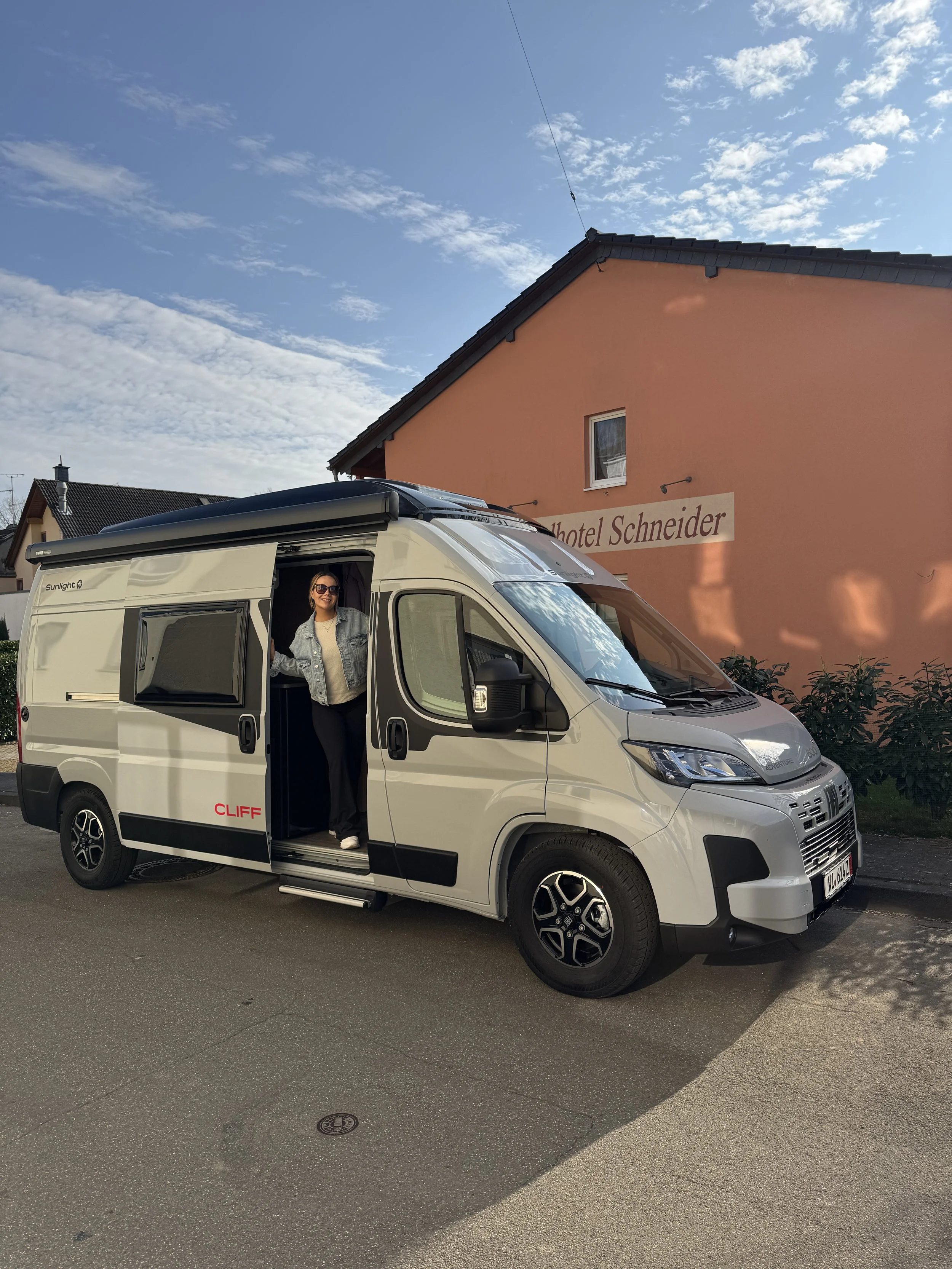
Winter-long research and comparison turned into a rush as spring advanced – and eventually, I settled on a Sunlight Cliff 600 Adventure RT camper van. Its layout impressed me: with the pop-top roof closed, the vehicle had the space of traditional two-person models, but by opening the roof, it provided enormous additional sleeping space for two in five seconds. A clever solution that suits couples, families, and groups of friends equally well.
The vehicle was otherwise familiar in many respects for a camper van, but every detail was slightly better than its predecessors. The interior was a few centimeters more spacious, the cabinets held more, and the refrigerator was larger and more sensibly placed than, for example, in the LMC Innovan. The refrigerator placed next to the door was a luxury in everyday life – it could be filled and emptied from the outside as well. In addition, the refrigerator had a small but important extra: a "wind hook" that allowed the door to be left ajar when the fridge was not running. This prevented the quickly forming stale odor. At the rear of the vehicle, on the side, there was also one large window, which, together with the rear door windows, created a sense of space and opened up views to the scenery directly from the bed, more openly than in other vehicles.
It quickly became clear that there were hardly any used units available. And the few that were found cost almost as much as new ones. So, for the first time, I decided to get a brand-new car from abroad. Finland's car tax exemption for motorhomes made it a sensible solution. For passenger cars, the same would not be possible, as cars under six months old or driven less than 6000 km are taxed as new in Finland.
Since the previous LMC and Benimar were manuals, I decided that this time an automatic transmission would be sought. For a camper van, an automatic is a more comfortable and easier option for many customers.
While planning the trip, the idea of a small adventure came to mind. The idea of acquiring two identical vehicles arose because I was going on the trip with my partner, Jessica. When learning the functions and features would be similar in both, it would also simplify practical everyday life. Although I generally like the idea of offering customers as diverse a selection as possible, owning two similar vehicles also brings ease.
First suitable vehicle was found in Wiesbaden, near Frankfurt. The deal was agreed remotely, and the handover date was set for March 25, 2025. The second vehicle was found in Huckelhoven, near Düsseldorf. Jessica also wanted a stop at the tulip fields in Holland for the trip, so I planned the trip around it. The deal for the Huckelhoven vehicle was also agreed remotely, and its handover was arranged for April 1, 2025. This way, we could first travel with one vehicle along the Rhine scenery and through Holland, and then return to pick up the second vehicle.
When comparing prices, the saving was about 5000 € per vehicle compared to Finland – not gigantic, but still profitable. And most importantly: picking up a car from abroad is always an experience and an adventure whose memories are hard to put a price on.
The search begins – towards Wiesbaden
The first of March dawned with a hated morning flight. I never sleep properly before early departures, so the first day of vacation often passes in fatigue. Fatigue also makes one more susceptible to illness – the dry air and germs of the airplane don't help. For this reason, leaving by motorhome is often more pleasant: well-rested and according to one's own schedule.
This time, however, the direct flight to Frankfurt went quickly, and an Uber conveniently drove us to the car dealership in Wiesbaden. Our new camper van was already waiting in the yard. The service was excellent, but the handover stretched into a nearly five-hour bureaucracy marathon.
Because it was a brand-new car, temporary license plates could not be arranged in advance. This required the buyer's physical presence at the registration office. We went from counter to counter with the seller, but the problem turned out to be that the plates could not be registered for a foreign company or person. In the end, the seller reluctantly had to register the plates in his own name, which was naturally not appealing, as all possible fines and fees would be addressed to him personally.
Once the chassis numbers were finally checked and the car registered, we still got the plates from the manufacturer and had them put in place. I remember observing my father's car acquisitions from Germany when I was younger, but I hadn't had to go through this process myself for 15 years. Now that too was experienced. Combined with a poorly slept night, I felt exhausted, but the relief was enormous when the plates finally clicked onto the car.
Equipping and departing for adventure
Before leaving, the seller also sold us useful equipment: WC chemicals, a gas bottle, camping chairs, a water hose, an electric cable, and other necessities. The water tank was filled, and we headed for our first stop – a small village restaurant that an employee had tipped us off about. After a good meal, we visited Ikea and a grocery store to replenish our supplies. Now we were ready to begin our adventure with the new camper van.